A garage door spring lasts for a set number of open-and-close cycles, not a fixed number of years. How long should a garage door spring last at your home depends on its cycle rating, how often the door moves, and the door’s condition. Watch for changes in movement, sound, or balance, and stop using the door if it seems unsafe.
Garage door springs help carry a heavy door as it moves. If a spring breaks, the door may be hard to lift or unsafe to use. Knowing the warning signs can help homeowners in Logansport keep people, cars, and property away until the door has been checked.
Table of Contents
- How long should a garage door spring last?
- What factors shorten a garage door spring’s lifespan?
- What types of garage door springs are there?
- How can you tell if a garage door spring is broken?
- Why are garage door springs replaced in pairs?
- Why is replacing a garage door spring not a DIY job?
- How do lift cables relate to garage door springs?
- Can garage door maintenance help springs last longer?
- Can you keep using a garage door with a broken spring?
- When should you call a garage door repair professional?
- Key takeaways
- Frequently Asked Questions
- Conclusion
How long should a garage door spring last?
A garage door spring is made to handle a certain number of open-and-close cycles. One cycle means the door opens and then closes once. The time that takes at a home depends on how often the door moves and whether its parts work well together.
What does a spring’s cycle rating mean?
A spring’s cycle rating is the number of door cycles it is built to handle in expected conditions. It can help owners understand what to expect, but it is not a promise of an exact service life. A household that opens its door often may use up the rated cycles sooner than a household that uses the door less.
The spring is one part of a larger system. The door, tracks, rollers, cables, and opener all affect how smoothly it moves. Even a spring that fits the door can wear sooner if another part sticks or the door is out of balance.
Why can actual service life differ from the rating?
A cycle rating cannot account for every home or business. Daily use, moisture, dirt, rust, and poor door balance can all affect wear. A spring that does not match the door’s weight can also cause trouble. A technician can check the spring and other parts to help find the cause.
In Logansport, local weather and a household’s garage habits can shape the care a door needs. Logansport Garage Door Repair can help property owners learn whether a spring shows wear or has failed. The cycle rating is a useful guide, while the door’s actions can show when it needs attention.
What factors shorten a garage door spring’s lifespan?
Frequent use, rust, poor balance, and worn parts can shorten a spring’s working life. The spring does not work alone. If the door drags or weighs more than the spring is made to lift, the spring may face extra strain every time the door moves.
How do door use and household routines affect spring wear?
Each full opening and closing adds one cycle. A door used by several drivers throughout the day may move more often than a door used mainly for storage. How often the door moves is only one part of spring life, but it helps explain why similar springs may wear at different rates.
Leaving a door partly open or using it when it is already struggling can also strain its parts. The opener is not meant to make a heavy or damaged door safe to move. If the door hesitates, jerks, or makes a new sound, stop using it and arrange a check instead of asking the opener to keep pulling.
Can rust, temperature, or poor balance cause early failure?
Rust can weaken metal and make parts move less smoothly. Changes in temperature can affect metal parts and door movement. Poor balance makes the spring work harder than it should, while dirt or worn rollers can make the door drag. These problems can add strain even if the spring looked sound before.
You can notice a change without trying to adjust the spring. Watch whether the door moves evenly, listen for new sounds, and look for loose or damaged parts from a safe place. If the door looks crooked or feels unusually heavy, stay clear and ask a trained technician to check it. Do not try to fix a balance problem by adjusting the spring yourself.
What types of garage door springs are there?
Most home garage doors use torsion springs or extension springs. Both help lift and lower the door, but they sit and work in different ways. The right type depends on the door’s design and weight, so one type is not a simple stand-in for the other.
How do torsion springs work?
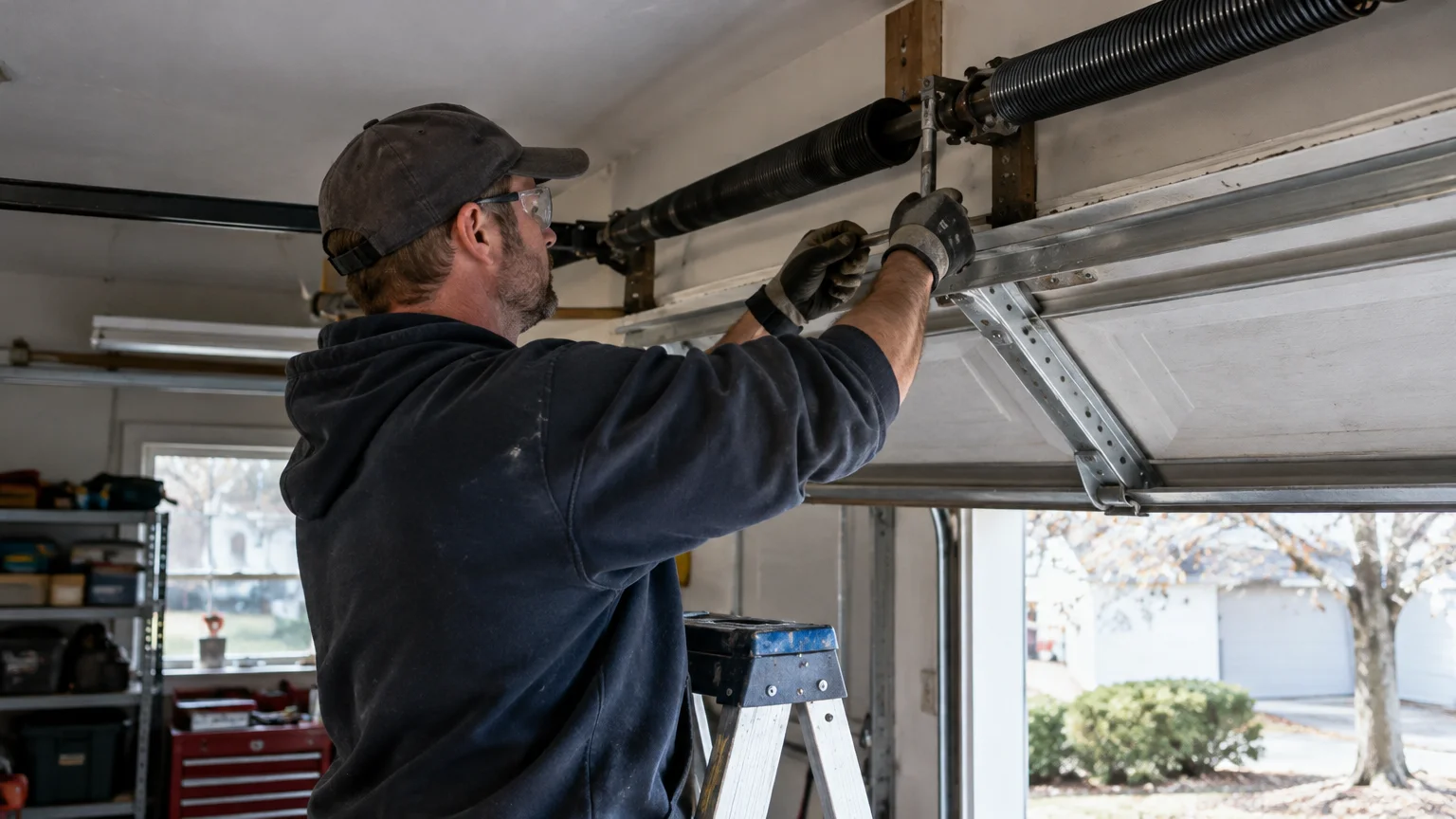
Torsion springs sit on a metal shaft above the door opening. As the door moves, the spring twists and releases force to help lift the door. That stored force stays under tension. A broken torsion spring may show a gap in its coil, but a break is not always easy to see from the ground.
The spring is under strong tension, so its parts can move with great force if handled the wrong way. Homeowners should not loosen, wind, or remove a torsion spring. A trained technician has the right tools and knows how to work safely around that stored force.
How do extension springs differ?
Extension springs are usually set along the sides of the door tracks. They stretch as the door closes and help lift it as it opens. Safety cables may pass through them to help contain a spring if it breaks. Door setups vary, and a safety cable does not make a spring safe to handle.
Both types can break and need careful repair. From a safe spot, you can look to see if a spring appears broken or out of place. Do not touch a spring, cable, or bottom bracket. Logansport Garage Door Repair can check the system and identify the spring type before suggesting what to do next.
How can you tell if a garage door spring is broken?
A loud bang, a door that will not lift, a gap in a spring, or a crooked door can point to a broken spring. These signs can also come from other problems, so they do not prove the cause by themselves. Keep people and vehicles away, and do not try to move the door by hand.
What visible and audible signs should you look for?
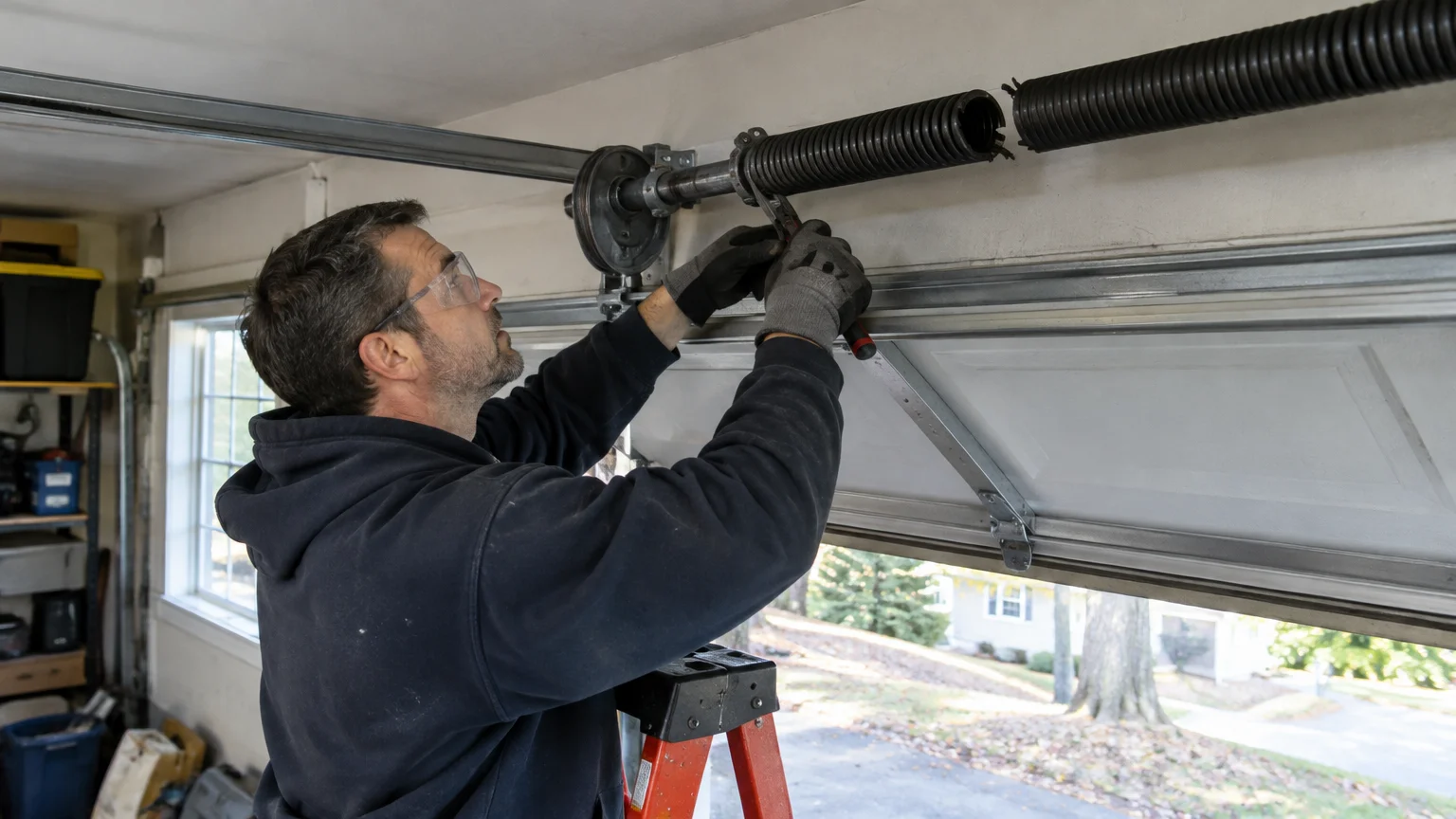
A broken spring may leave a gap in a coil above the door or along its sides. The door may look uneven, move only a short way, or stay shut. Some doors make a loud bang when a spring breaks. The sound may happen even if nobody sees the spring break.
A loose cable, a door hanging at an angle, or a new scraping sound also needs attention. Do not stand under the door to look closely. Watch from a safe distance, and do not pull a cable or touch a spring. If the door seems unstable, keep the area clear.
Why might a door stop opening when a spring fails?
The spring helps carry much of the door’s weight. If it breaks, the opener may sense too much resistance and stop. It may also strain as it tries to lift the door. The opener cannot replace a working spring, and pressing the remote again and again can make the problem worse or harm other parts.
A door that opens only a little may still be heavy and unsafe. Do not force it up or let it drop. If the opener has a manual release, do not use it to move a door that may lack support. A professional can secure the door and check the spring, cable, opener, and other parts.
Why are garage door springs replaced in pairs?
When a door has two matching springs, a technician may suggest replacing both because they have often had similar use. If one breaks, the other may also be worn. Replacing only the broken spring can leave an older one working beside a new one, which may cause uneven support or another repair soon.
How does replacing one spring affect the other?
A pair of springs often shares the door’s load. If one spring breaks, the other may have to carry more of that load. Extra strain can affect balance and movement. A new spring beside a worn one may also respond differently.
This does not mean every door needs two new springs each time. The door’s design, spring condition, and repair history all matter. A technician can check if both springs match, whether one is still in good shape, and whether the door moves as it should.
When might a technician recommend replacing only one?
A technician may consider replacing one spring when the door has only one spring or when the other is newer and in good shape. The choice should follow a check of the door and its parts. It should not rest only on the fact that one spring looks broken.
The technician should also check the balance, cables, rollers, and opener. Recent spring work may matter, too. Tell the technician what you noticed, such as a bang, a change in movement, or a recent repair. Clear details help them check the whole system and explain a safe plan.
Why is replacing a garage door spring not a DIY job?
Replacing a garage door spring is not a safe do-it-yourself job because the spring stores force that can release without warning. Torsion springs, extension springs, lift cables under tension, and bottom brackets can cause serious harm if handled the wrong way. This work needs training, the right tools, and a safe way to control the door.
What makes spring tension dangerous to handle?
A loaded spring can turn or snap with great force. Cables and brackets attached to it may also be under tension. If a tool slips, a part breaks, or the door moves at the wrong time, someone can get hurt. The door itself is heavy and may fall if it is not held safely.
Videos or general advice cannot show the exact state of a particular door. Spring type, door weight, hardware, and damage can differ from one door to another. Copying a repair without knowing these details can make the door less safe. Do not try to wind, loosen, cut, or remove a spring, cable, or bottom bracket.
What can happen if a repair is done incorrectly?
A poor repair can leave the door out of balance, make it fall, or cause cables to come loose. It can also strain the opener and other parts. A damaged spring may not be the only problem. A full check matters because changing one part without finding the cause may not fix unsafe movement.
You can safely watch the door from a distance, clear the area, and tell a technician what happened. You do not need a professional for simple checks, such as looking for visible damage from a safe place or clearing loose debris from the tracks. Spring and cable work is different. Leave that work to someone trained to manage the stored force.
How do lift cables relate to garage door springs?
Lift cables help raise and lower the door by working with its spring system. They run along the door’s sides and connect to parts that support its movement. If a cable frays, slips, or breaks, the door can become uneven or unstable. A cable problem can look like a spring problem, too.
What do lift cables do as the door moves?
As the spring helps balance the door, the cables support and guide its movement. The cables need to stay in place and work with the springs. If one side fails, the door may hang unevenly or catch in the tracks. This can add strain to the spring, rollers, and opener.
A cable that comes loose may point to spring trouble, poor balance, damaged hardware, or uneven door movement. A close check is needed to find the cause. A cable under tension is dangerous, so do not pull it back into place or try to remove it.
What signs may indicate a cable problem?
Look from a safe place for a loose or frayed cable, a door that leans, or movement that is no longer smooth. A cable may be hard to see, so not seeing a problem does not rule one out. If the door looks crooked or makes a new sound, stop using it.
Garage Door Cable Repair is a professional service for cable problems. If a cable seems out of place, stay clear of it and the door. Do not run the opener to see if the cable moves back into place. A technician can check the cable and spring system together and find why the door moves unevenly.
Can garage door maintenance help springs last longer?
Safe, regular checks can help owners spot wear before the door stops working, but they cannot stop every spring from breaking. Homeowners can keep the door area clean, watch and listen as it moves, and follow the maker’s care advice. A trained technician should handle spring adjustments and repairs.
Which routine checks are safe for homeowners?
You can look for loose debris in the tracks and keep the area around the door clear. You can also watch the door open and close from a safe place. A change in speed, sound, balance, or movement is a reason to stop using it and seek help. These checks do not mean touching a spring or cable.
A simple checklist can help you spot changes:
- Keep people, pets, and stored items away from the door’s path.
- Look from a safe distance for damage, loose parts, or a crooked door.
- Listen for new banging, grinding, or scraping during normal use.
- Stop using the door if it jerks, feels heavy, or moves unevenly.
- Follow the maker’s advice for safe care and routine upkeep.
You do not need a professional for these basic checks and simple cleaning. Do not test a spring by lifting a heavy door or touching parts under tension. If you notice a problem, leave the repair to a technician.
Why should spring adjustment and lubrication follow professional guidance?
Spring adjustment changes the force the spring applies. A wrong change can make the door too heavy, too light, or unsafe. Care advice for lubrication can also differ by door and part. The wrong product or wrong place may not help and could cause another problem.
Follow the advice for your exact door and opener. If it is not clear, ask a trained technician rather than guessing. Garage Door Maintenance can include a professional check of the moving parts and balance. Logansport Garage Door Repair can help owners decide if a change in door movement needs a closer look.
Can you keep using a garage door with a broken spring?
No. Do not use a garage door with a broken spring until a professional has checked and repaired it. The door may be too heavy for the opener, may move unevenly, or may fall. Keep children, pets, cars, and other people away from the door and its path.
What should you do if the door is stuck open or closed?
Do not force the door, keep pressing the remote, or try to lift it alone. If it is stuck open, treat the opening as unsecured and keep people away. If it is stuck closed, do not pull it up or disconnect the opener to move it. The door may not have safe support.
Keep opener controls out of reach while the door is unsafe to use. If the door is partly open, do not stand under it or leave a vehicle in its path. Have a professional assess the door and secure it. If someone faces immediate danger, move away and seek the right emergency help.
How can you protect people, vehicles, and property while waiting for repair?
Keep the area clear and tell everyone at home or work not to use the door. Use another safe entrance if you can. Do not leave a vehicle under a door that may shift or fall. Avoid touching cables, springs, brackets, or anything that looks loose.
If the garage cannot be secured, move valuable items away from the opening only when it is safe. Do not climb near the door or try to hold it in place with objects. A technician can advise how to keep the area safe while you wait. Acting quickly can help prevent injury or more damage.
When should you call a garage door repair professional?
Call a professional soon if a spring looks broken, a cable is loose or frayed, or the door is crooked, heavy, or stuck. These signs can point to a safety risk. Stop using the door until someone checks it. A trained technician can find the failed part and check the rest of the system.
Which spring or cable symptoms need prompt attention?
A loud bang, a gap in a spring, a hanging cable, or a door that will not lift safely needs attention. A door that moves unevenly or stops partway may also have a spring, cable, track, or opener problem. Do not assume the opener is the only issue just because the door will not open.
People searching for garage door repair services near me should choose a provider that can check spring and cable safety, not only get the opener running. The same applies when looking for near me garage door repair or garage door repair closest to me. Local service should start with a careful door check and a clear explanation of what comes next.
What information can help a technician assess the problem?
Tell the technician what the door did, when the change started, and whether anyone heard a bang. Say whether the door is open, closed, or partly open, and whether it looks crooked. Mention any recent work on the door or opener. Do not try a test just to gather more details.
If it is safe, a short description of visible damage may help. Nobody should move closer to inspect a spring or cable under tension. Logansport Garage Door Repair serves Logansport and nearby communities, including Dunkirk, Miami Bend, Peru, Royal Center, Camden, and Fulton. A professional can help property owners understand the next safe step.
Key takeaways
- A spring’s cycle rating is a guide, not a set number of years.
- Frequent use, rust, poor balance, and worn parts can add strain.
- Broken springs and loose cables can make a door unsafe to use.
- Homeowners can do basic visual checks and keep the area clean.
- Leave spring, cable, and bottom-bracket work to trained professionals.
Frequently Asked Questions
How long should a garage door spring last?
How long a garage door spring lasts depends on its cycle rating, how often the door moves, and the condition of the door system. The rating does not promise a set number of years. If the door becomes heavy, crooked, or noisy, stop using it and arrange a professional check.
Can a garage door opener lift a door with a broken spring?
An opener may try to move a door with a broken spring, but you should not use it for that job. The spring helps carry the door’s weight, and the opener is not a safe replacement. Continued use can strain the opener or make the door move in an unsafe way. Keep clear and ask a professional to check it.
Why do garage door cables come loose?
A cable can come loose because of spring trouble, poor balance, damaged hardware, or uneven door movement. It may also point to a larger problem that is hard to see from the ground. Do not pull or reset a loose cable. It may be under tension, so leave the door still and have it checked.
Should both garage door springs be replaced at once?
When a door has matching springs, replacing both may help keep the system balanced, especially if both have had similar use. A technician should check the springs and door before making that choice. In some cases, one spring may be replaced on its own, such as when the other is newer and in good shape.
Can a garage door be opened by hand after a spring breaks?
Do not try to lift a door by hand after a spring breaks. Without spring support, the door can be very heavy and may fall or move unevenly. Do not use the opener or release the door to test it. Keep people and vehicles away, then have a trained technician secure and check the system.
Conclusion
Garage door springs do not last the same amount of time in every home. Their cycle rating, daily use, rust, balance, and other worn parts all matter. A broken spring or loose cable can make a heavy door unsafe, so do not keep using it or try to repair it yourself.
Basic visual checks and a clean door area are safe for homeowners. Work on springs, cables, and bottom brackets is not. If a spring or cable may have failed, Contact us today to arrange professional help from Logansport Garage Door Repair.
If you are not sure what you are dealing with, it is worth having someone look at it before it turns into a bigger job. Get in touch with Logansport Garage Door Repair today and we will tell you where you stand.